Introducing DA Verify API: less insurance work, more time for patients
A new developer-facing path for bringing dental insurance verification into the software practices already use, plus a direct new editorial series for dental operators.
Dentistry Automation blog
Explore the complete Dentistry Automation library: insurance verification, payment posting, claims, A/R, APIs, practice operations, and the business decisions behind them.
Our newest editorial series sits alongside every established guide, so no article gets lost when new content is published.
One complete library
Search the latest editorial posts and the existing Dentistry Automation article collection in one place.
Search the full article library

A new developer-facing path for bringing dental insurance verification into the software practices already use, plus a direct new editorial series for dental operators.
Start with a workflow
Choose a core revenue-cycle topic to understand the workflow, then narrow the library to practical articles for that area.
Payment Posting
Explore how ERAs, EOBs, adjustments, patient balances, and reconciliation fit together—and where automation can support the workflow while teams review exceptions.
Insurance Verification
These guides cover eligibility, benefit details, deductibles, limitations, payer workflows, and the operational checks that can reduce avoidable downstream rework.
Claims & Follow-Up
Learn how to organize follow-up around payer status, missing information, deadlines, denials, and the accountability needed to keep claims moving.
A/R Management
Read practical guidance on aging, recoverability, follow-up workflows, and how a structured exception queue can help teams focus on the right claims first.
Revenue Cycle Management
From scheduling and benefits through claims, payment posting, and reconciliation, these articles map the handoffs that determine whether expected revenue is collected.
DentalBridge API
Explore integration concepts, data normalization, and the role a PMS connectivity layer can play when dental organizations need reliable data across systems.
All articles
192 articles

A per-verification number only tells part of the story. Compare benefit depth, staff touchpoints, repeat checks, and exception ownership before deciding what the work should cost.

A posting percentage only makes sense after you define its base, the work included, and what is still left to your team after the remittance is posted.

Before accepting or rejecting an RCM percentage, define the collection base, included work, internal workload, and the exception ownership that remains after automation.

Collections alone do not set a practice's value. Learn how normalized earnings, owner dependence, records, and transaction terms shape the conversation.

A second office does not automatically create a functioning DSO. Start with a defined support model, consistent operating data, and professional legal guidance.

Selling starts before the letter of intent. Prepare clean records, explain the RCM story, and understand what each offer actually delivers at closing and later.

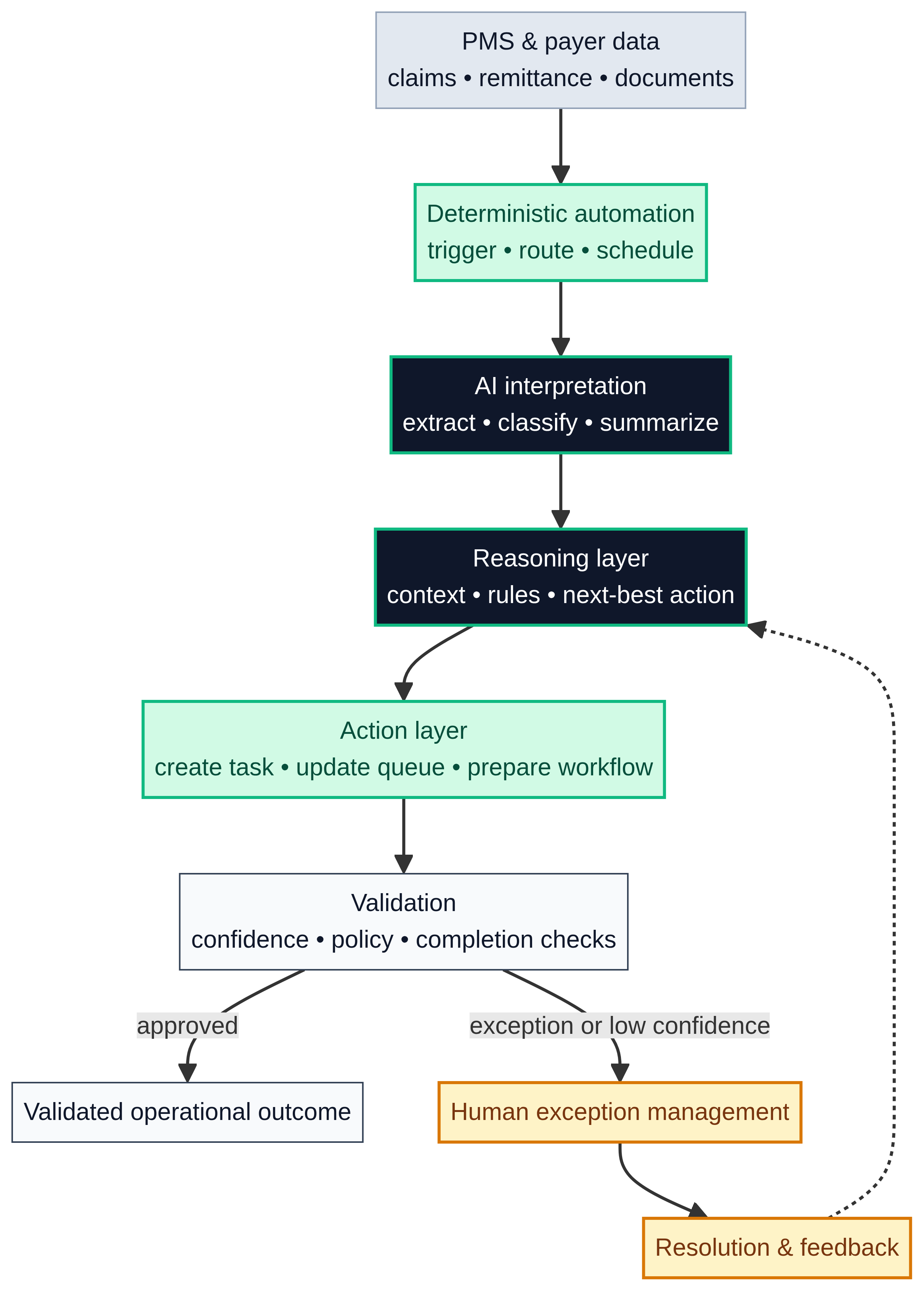
Learn how workflow automation, dental RPA, AI extraction and AI agents differ in dental RCM—and where human escalation remains essential.

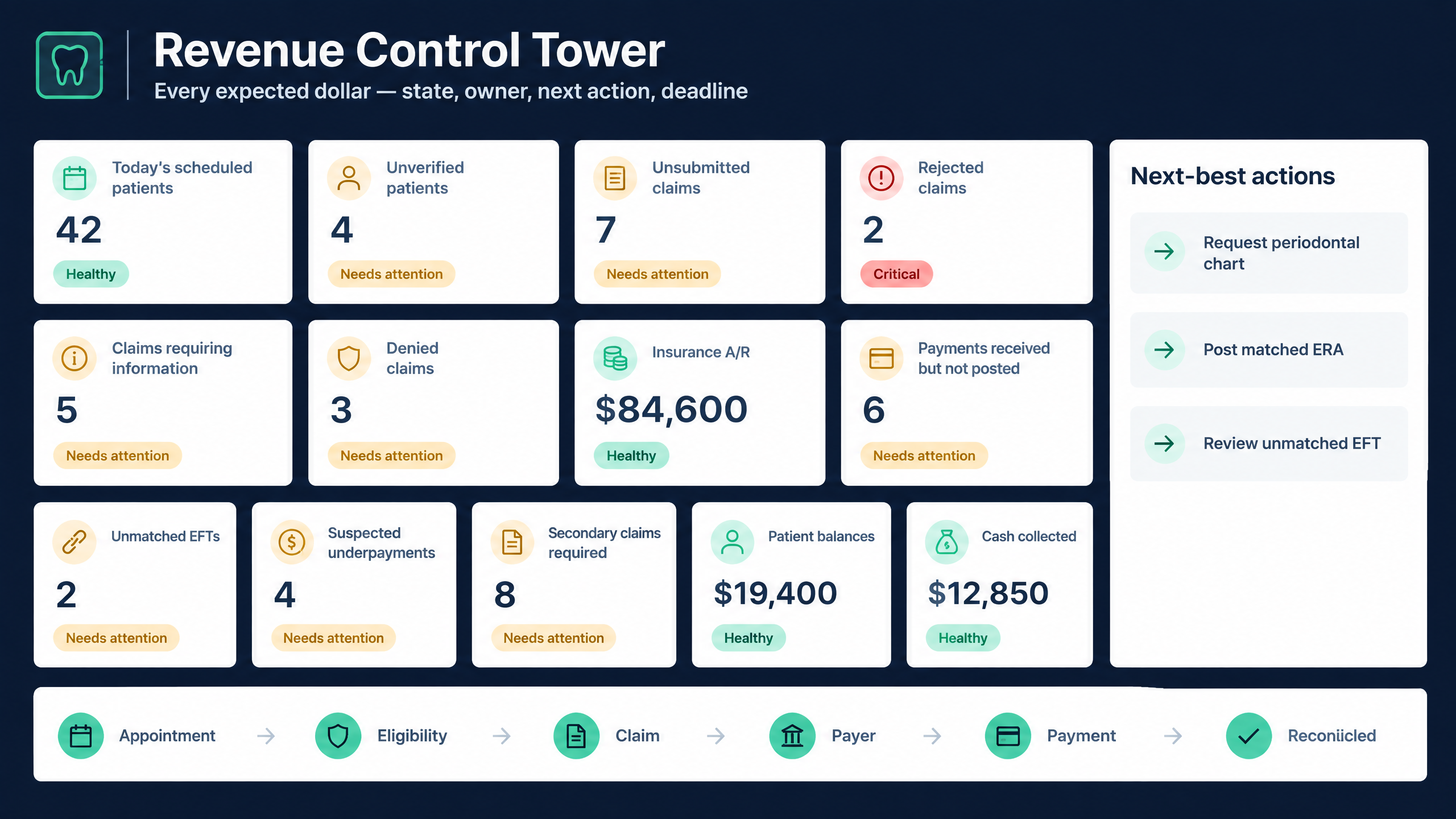
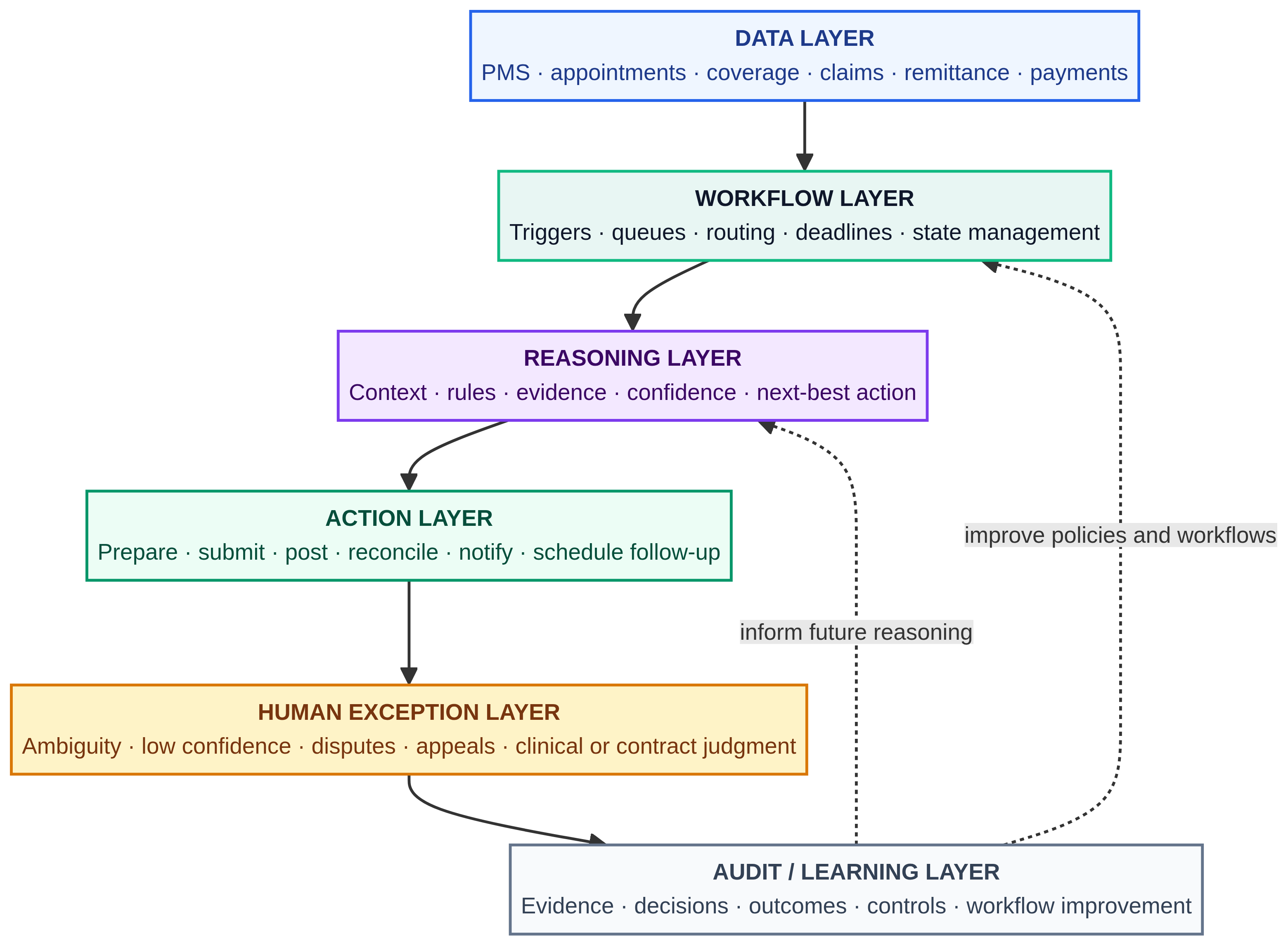
See how a dental revenue control tower connects appointments, claims, payments, reconciliation, and next-best actions across the revenue cycle.

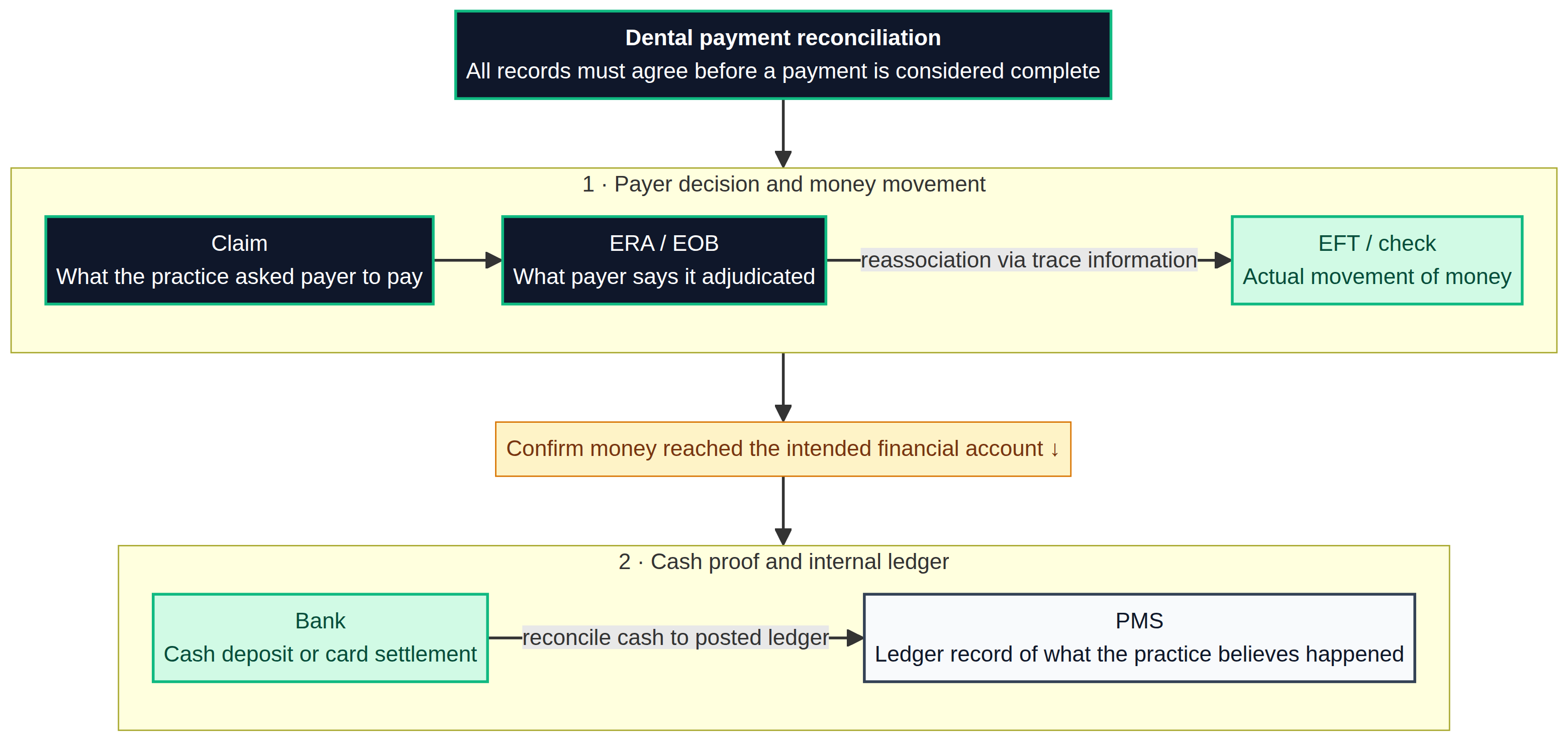
Learn how claims, ERAs, EFTs, bank deposits, and PMS ledgers must agree in dental payment reconciliation—and what to investigate when they do not.

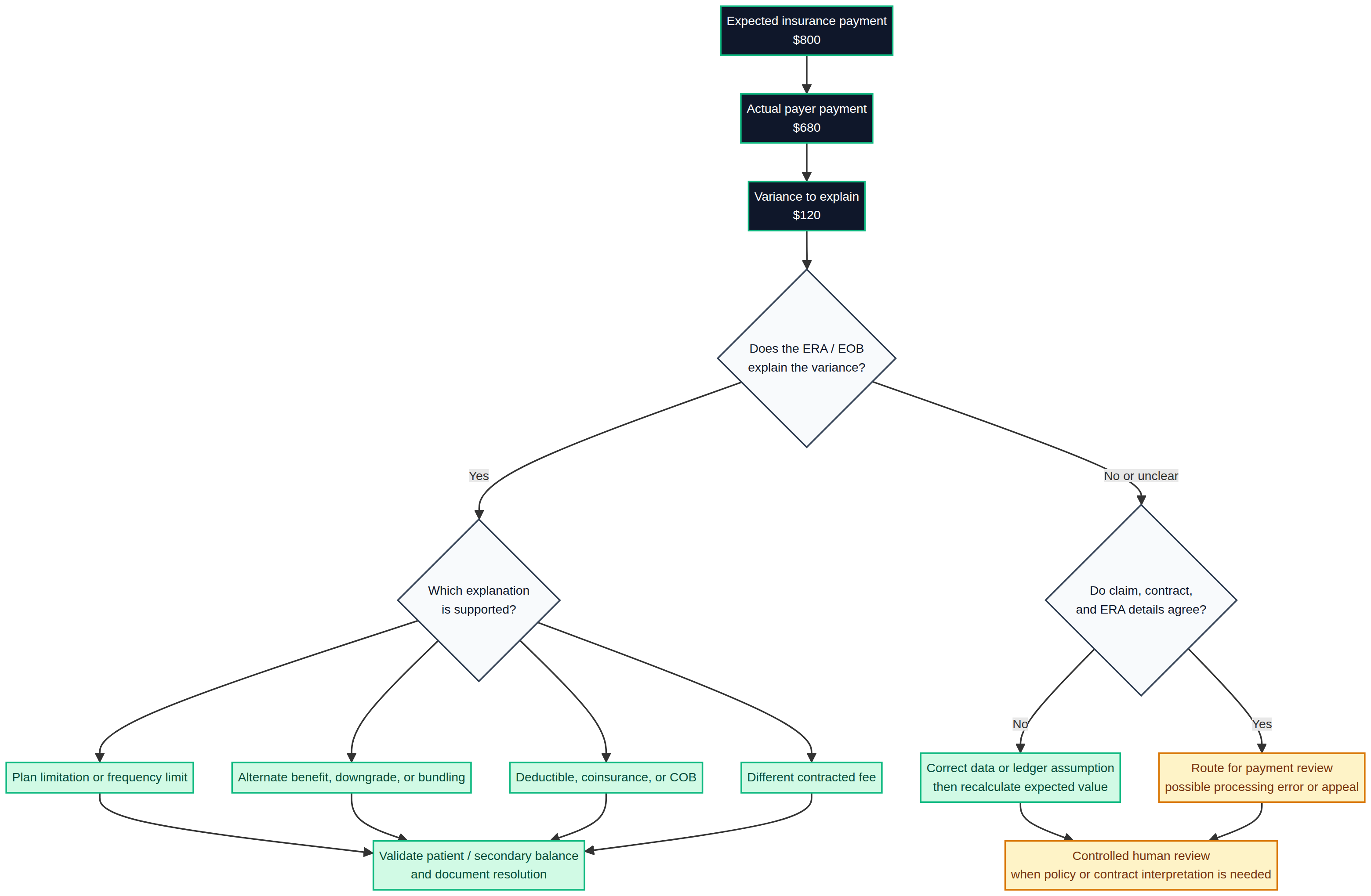
A paid dental claim can still contain a reimbursement variance. Learn how payment intelligence examines the allowed amount, patient responsibility, payer payment, and ERA details.

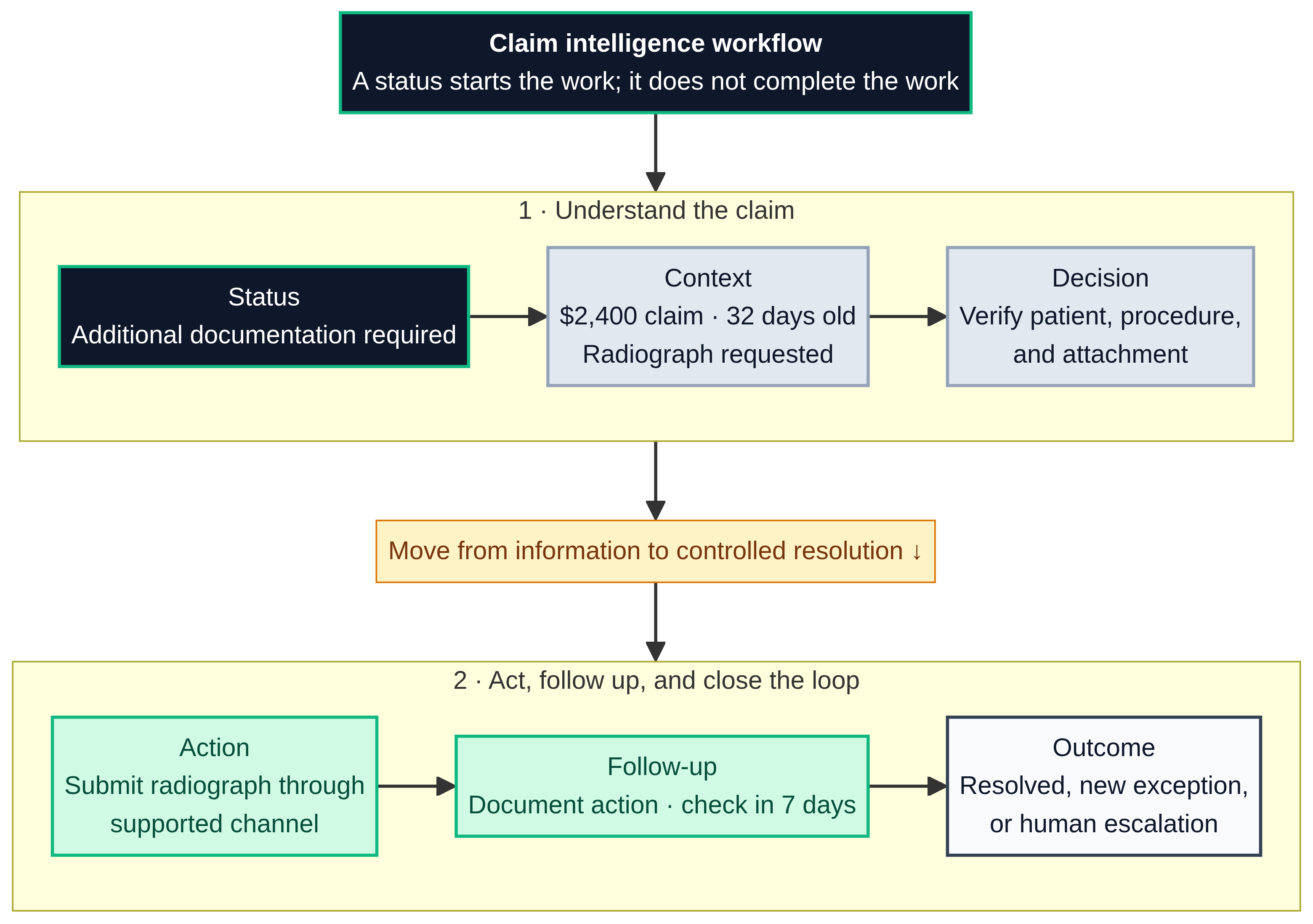
Claim-status retrieval saves time, but revenue-cycle value begins with the next action. Learn how dental teams can convert payer statuses into owned, time-bound follow-up.

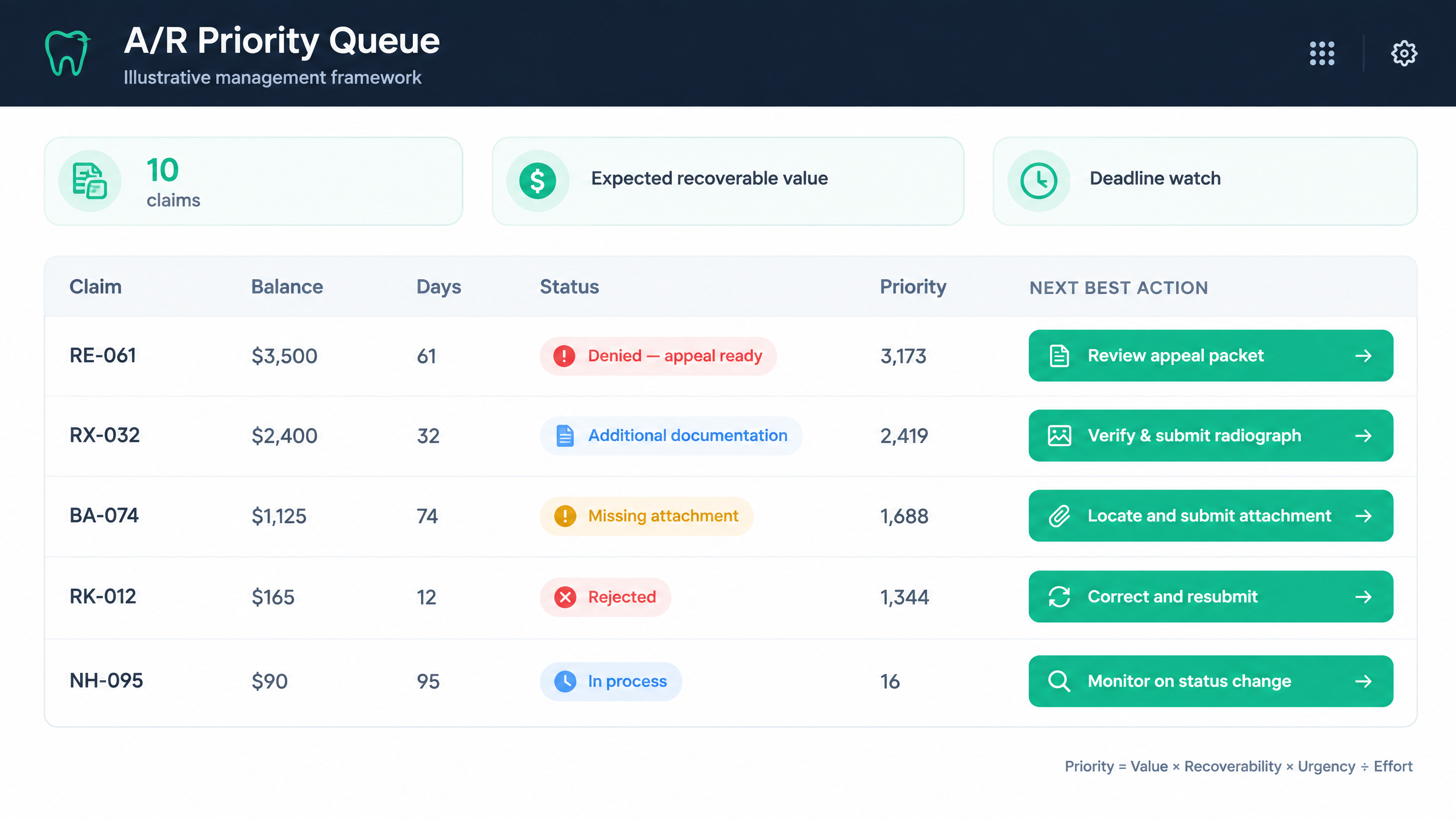
Learn an illustrative way to prioritize dental A/R by expected recoverability, urgency, value, and effort—not claim age alone.

Use this 20-point dental revenue leakage checklist to audit insurance verification, claims, payer follow-up, payment posting, reconciliation, and patient balance handoffs.

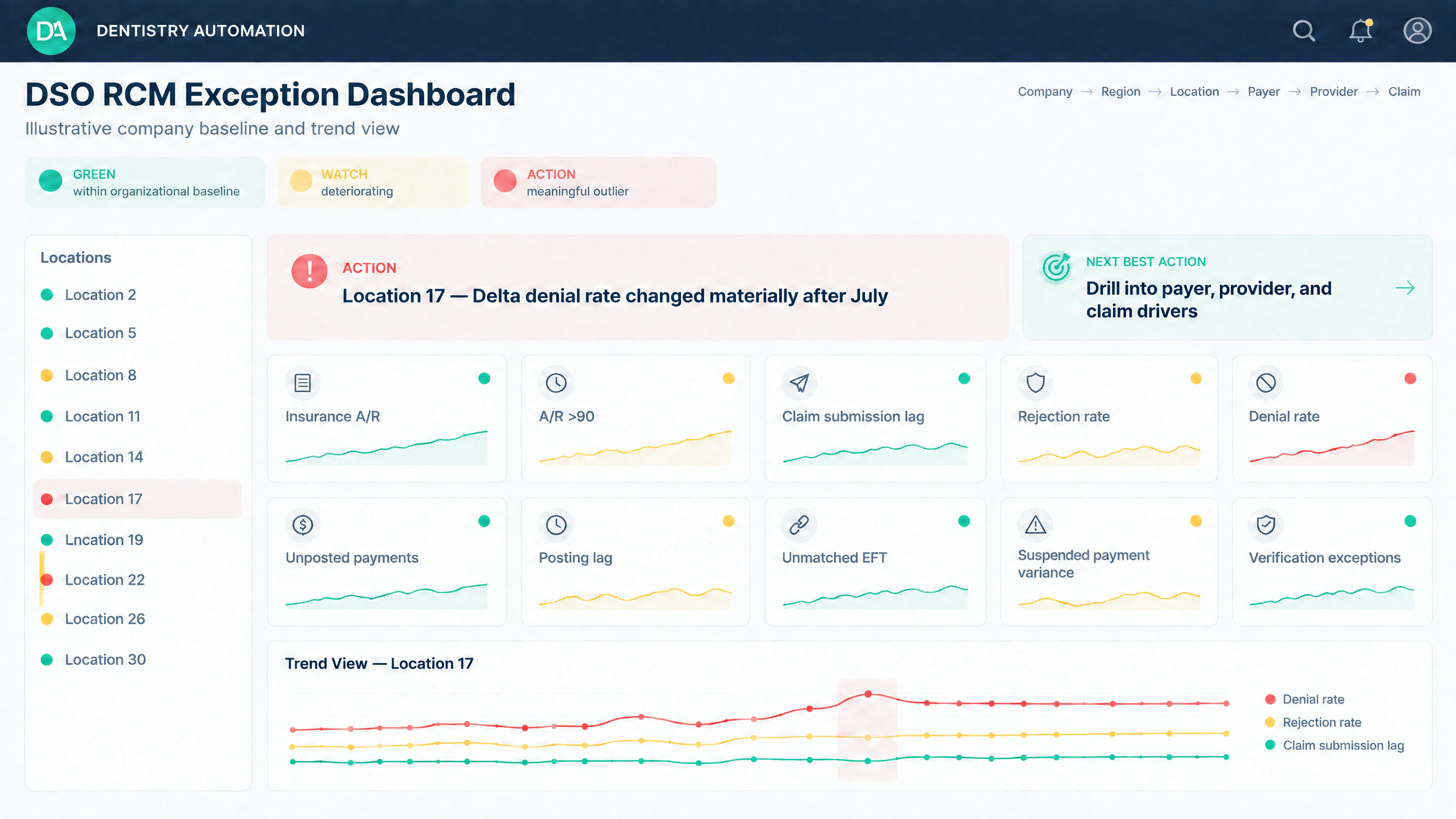
Aggregate DSO metrics can hide location-level revenue-cycle problems. Learn how management by exception surfaces the locations, payers, providers, and claims that need intervention.

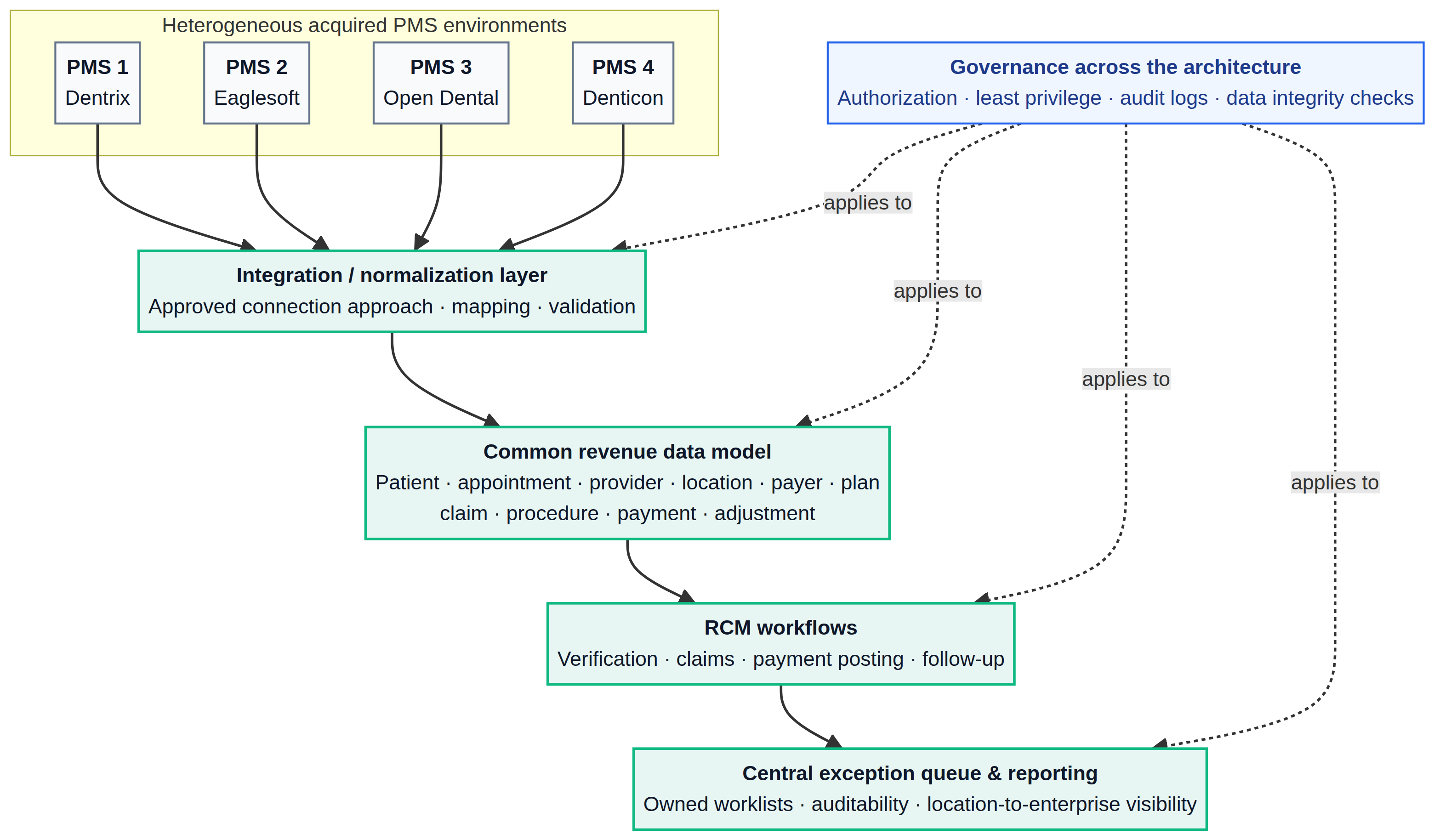
A DSO can centralize revenue-cycle workflows across acquired PMS environments without immediately replacing each system. Learn the architecture, integration choices, controls, and exception-management model.

A practical future-state view of autonomous dental RCM: where workflows and agents can act, where confidence checks belong, and why humans still manage judgment and exceptions.

Use this dental insurance verification checklist to review eligibility, benefits, deductibles, limits, exclusions, and more before patient appointments.

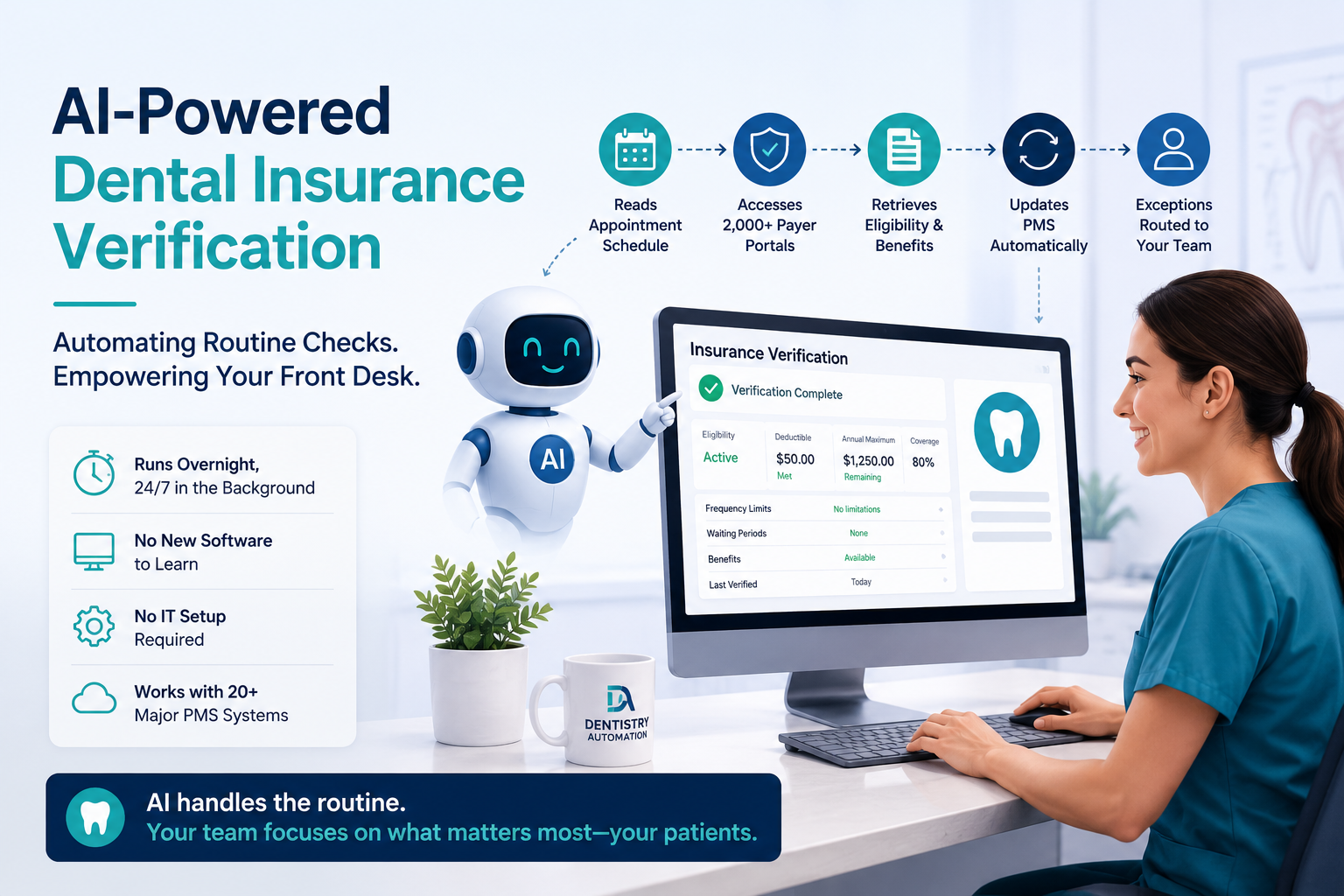
See how AI-powered dental insurance verification automates routine benefit retrieval, PMS updates, and exception routing while keeping staff oversight.
Showing 18 of 191 articles
Join 2,000+ dental professionals who receive our weekly newsletter on RCM automation, practice efficiency, and revenue growth strategies.
No spam. Unsubscribe anytime. We respect your inbox.